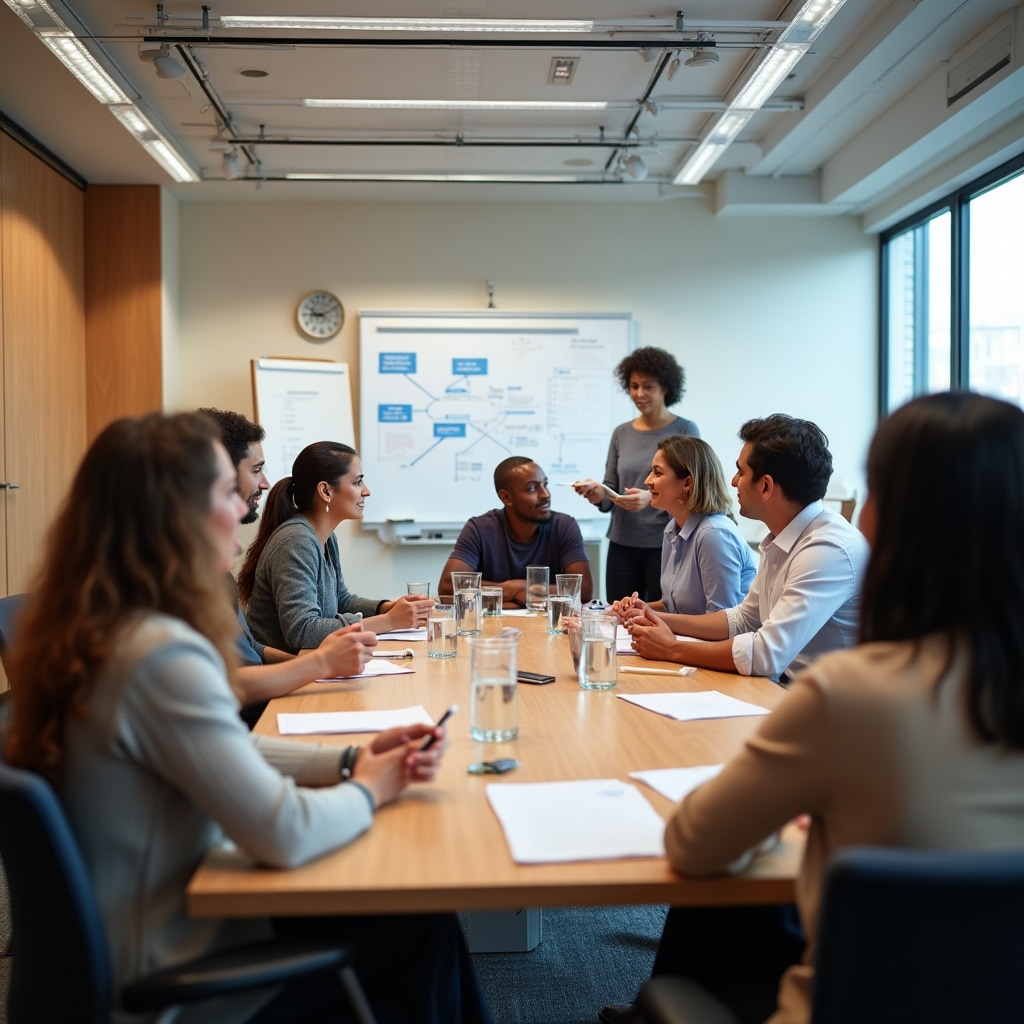
Transform workplace dynamics through expert training in cross-generational communication. Create environments where Baby Boomers, Gen X, Millennials, and Gen Z collaborate seamlessly, share knowledge effectively, and drive innovation together.
Working together in today's workplace
Shared goals across age groups
Modern workplaces bring together four distinct generations, each shaped by different technologies, values, and communication styles. Without intentional bridge-building, these differences create friction, misunderstandings, and missed opportunities.
Your workplace likely includes Baby Boomers who value face-to-face meetings and formal communication, Gen X employees comfortable with both analog and digital worlds, Millennials seeking purpose and feedback, and Gen Z workers who grew up with smartphones and expect instant connectivity.
These diverse perspectives are tremendous assets when channeled properly. However, without understanding and frameworks for collaboration, they become sources of tension. Younger employees may perceive older colleagues as resistant to change. Senior team members might view younger workers as lacking commitment or professionalism.
Miscommunication across age groups slows decision-making, creates duplicate work, and erodes team cohesion. Valuable institutional knowledge remains trapped in the minds of experienced employees rather than being transferred to newer team members. Innovation stalls when different generations work in silos rather than combining their unique strengths.
A structured methodology that moves your organization from generational friction to cross-generational synergy
We begin by understanding your unique workplace dynamics through surveys, interviews, and observation. We identify specific communication gaps, collaboration barriers, and areas where generational differences create the most friction in your teams.
Based on our assessment, we create tailored training modules that address your organization's specific challenges. Content covers communication style differences, technology adoption strategies, mentorship frameworks, and collaborative tool implementation.
Engaging sessions bring together employees from different generations for experiential learning. Through role-playing, case studies, and facilitated discussions, participants develop empathy, learn adaptation strategies, and practice new communication approaches.
We provide ongoing guidance as your teams apply new skills in real work situations. This includes mentorship pairing facilitation, collaborative tool adoption support, and follow-up sessions to reinforce learning and address emerging challenges.
Each generation has developed distinct communication preferences shaped by the technologies and social norms of their formative years. Baby Boomers often prefer phone calls and in-person meetings, valuing the nuance of voice and body language. Gen X employees are comfortable with email and appreciate concise, direct communication. Millennials expect regular feedback and respond well to collaborative platforms. Gen Z workers are native to instant messaging and visual communication.
Our training helps team members recognize these preferences without stereotyping. Participants learn to flex their communication style based on their audience, choosing the right medium and tone for different situations. We teach strategies for ensuring important messages reach all generations effectively, regardless of their preferred channels.
Traditional mentorship typically flows from older to younger employees. Our framework recognizes that valuable knowledge exists across all age groups. We establish reverse mentorship programs where younger employees share digital expertise and emerging trends with senior colleagues. Simultaneously, experienced team members transfer institutional knowledge, industry wisdom, and relationship-building skills to newer workers.
We provide structured frameworks for these mentorship relationships, including goal-setting templates, meeting agendas, and progress tracking tools. Mentors and mentees receive training on how to maximize these partnerships, overcome potential awkwardness, and create genuine learning exchanges that benefit both parties.
New collaboration tools can either bridge or widen generational gaps, depending on how they're introduced. We guide organizations in selecting and implementing technologies that serve all age groups. This includes considering user interface complexity, training requirements, and integration with existing workflows.
Our approach involves creating technology champions across different generations who can provide peer support during adoption. We design training that meets people where they are, offering different learning paths for varying comfort levels with digital tools. The goal is ensuring everyone can participate fully in digital collaboration without feeling overwhelmed or excluded.
The ultimate goal is creating teams where generational diversity becomes a competitive advantage rather than a source of friction. We facilitate team-building activities specifically designed to highlight how different age groups complement each other. Younger employees bring fresh perspectives and technological fluency. Experienced workers contribute strategic thinking and relationship networks.
Through structured exercises, teams learn to leverage these diverse strengths intentionally. We help establish team norms that honor different working styles while maintaining productivity. Participants develop appreciation for what each generation brings to the table and learn to actively seek out diverse perspectives when solving problems.
When generational communication improves, the entire organization benefits
Messages reach all team members effectively regardless of age. Misunderstandings decrease as employees learn to adapt their communication style. Information flows more freely across generational boundaries, reducing silos and improving coordination.
Employees develop genuine appreciation for colleagues from different generations. Age-based stereotypes dissolve as team members see each other as individuals with unique contributions. Workplace relationships deepen, creating more resilient and supportive teams.
Diverse perspectives combine to generate more creative solutions. Younger employees' technological insights merge with experienced workers' strategic thinking. Innovation cycles speed up as teams leverage their full range of knowledge and skills.
Critical institutional knowledge transfers from experienced employees to newer team members before retirement. Reverse mentorship ensures digital skills and emerging trends reach senior staff. Your organization retains valuable expertise across generational transitions.
Employees of all ages feel valued and understood in their workplace. Younger workers gain access to mentorship and career development. Experienced employees remain engaged through meaningful knowledge-sharing opportunities. Turnover decreases across all age groups.
New technologies and processes gain acceptance across all age groups. Training approaches meet different learning preferences. Peer support networks help everyone succeed with new tools. Technology becomes an enabler rather than a divider.
Cross-generational communication training benefits any organization with diverse age demographics
Law firms, accounting practices, consulting agencies, and financial services organizations often have pronounced generational divides. Senior partners bring decades of client relationships and industry expertise, while younger associates offer technological fluency and fresh analytical approaches. Our training helps these organizations bridge the gap, ensuring seamless knowledge transfer and collaborative client service.
Hospitals, clinics, and healthcare systems employ staff ranging from recent graduates to professionals with 40+ years of experience. Generational differences in communication preferences can impact patient care coordination. We help healthcare teams develop communication protocols that work across all age groups while maintaining high care standards.
Even technology-focused organizations face generational challenges as they mature. Founding teams age while hiring younger talent with different expectations about work culture, communication, and collaboration. Our training helps tech companies maintain innovative cultures while building bridges between generations.
Production environments often have experienced workers with decades of hands-on knowledge alongside younger employees comfortable with digital systems and automation. We facilitate knowledge transfer that preserves critical expertise while embracing technological advancement.

Let's discuss how cross-generational communication training can strengthen your organization